An Interview with Susan Fitzpatrick – How to Find People to Surf With
Safety Information
The RNLI advises that you should surf with a friend whenever possible. This article shares ideas on how to find people to surf with, especially if you are new to the sport.
We do not recommend that anyone surfs alone without other surfers in the water.
You can read the RNLI surfing safety advice here:
https://rnli.org/safety/choose-your-activity/surfing
The Challenge Many Surfers Face
We hear the same story all the time.
“I’ve taken a few surf lessons and reached a level where I want to go out and practise. The problem is I don’t know anyone else who surfs.”
Even if you do know another surfer, it can still be difficult to line things up. Waves, work schedules, family commitments and other hobbies all need to match up.
Every surfer has experienced this problem at some point.
The obvious solution might seem to be heading out solo and surfing alongside whoever is already in the water. However, this can feel intimidating for many people who are still building confidence.
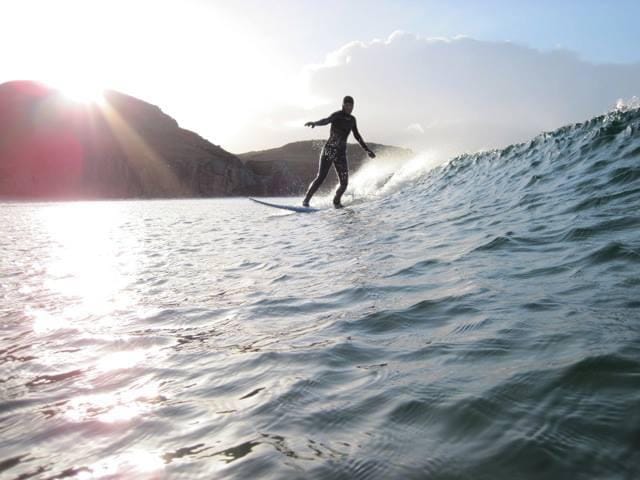
Recently we spoke with local surfer Susan Fitzpatrick about exactly this topic. Susan has been surfing the East Lothian coastline for over a decade and shared her experiences of starting out and building friendships in the water.
How Did You Start Surfing?
Q: How did you first get into surfing?
Susan:
The first time I tried surfing was on holiday in Newquay. It seemed like the perfect place to give it a go.
I booked a couple of beginner lessons and was instantly hooked. Before that I had done snowboarding, so I already enjoyed board sports.
When I came back to Scotland I contacted Coast to Coast to book some board hires. Around the same time I heard about their North Coast surf trips and decided to join one.
After the first trip I was completely hooked. I kept booking more tours and ended up going with nearly every instructor they had at the time.
Eventually I bought my first surfboard from Sam and my surfing really started progressing after that.
Your First Surf Sessions Back in Scotland
Q: Do you remember the first time you went surfing after returning home?
Susan:
Pretty much straight away.
One of the great things about the surf tours was that we learned a lot about reading forecasts and understanding the East Lothian coastline.
I wanted to surf regularly, and I didn’t want to wait around for people to join me. There were usually surfers at Belhaven or Pease Bay, so I felt comfortable heading out.
The first time I went myself I hired a board and headed to Pease at high tide. It turned out to be a bit of a shore dump and the tide was wrong. That was definitely a learning experience.
When I first started there were almost no women surfing in the lineup. That has changed a lot now. There are still more men overall, but I definitely see more women surfing now, especially on smaller days.
Surfing Alone vs Surfing With Others
Q: What are the benefits and downsides of surfing alone compared to surfing in a group?
Susan:
One of the benefits of surfing alone is that you are on your own schedule. You can take your time getting ready and check out different surf spots without feeling rushed.
However, if I arrive at a beach and nobody else is there, I don’t feel very confident heading out.
Even if you are surfing alone, it is always better to choose a beach where other surfers are already in the water. That adds a level of safety.
When I surf with a group there is definitely safety in numbers and the camaraderie is great.
Interestingly, when I surf alone I often surf better technically. I am more focused on the waves rather than chatting with people.
Challenges for Female Surfers
Q: Are there any additional challenges for women in surfing?
Susan:
Sometimes there is more attention drawn to women in the water. You might get comments or curious looks.
Occasionally people question what you are wearing, and I don’t think they would say the same things to men.
There are also practical challenges. Many beaches don’t have good changing areas or toilet facilities. That can make things more difficult for women.
Advice for New Surfers
Q: What advice would you give to someone starting out in surfing?
Susan:
If you are a total beginner, definitely start with lessons. Surf tours can also be a great way to gain experience.
Keep an open mind and enjoy the freedom that surfing brings. There is no pressure to go into the water once you arrive at the beach. Always make the decision that feels right for you.
I would not recommend surfing somewhere new completely on your own. It is much safer to surf a spot you already know.
Choose a part of the beach that matches your ability level and where you feel comfortable. Ideally you want other surfers in the water as well.
When you are ready to join a lineup – which simply means a group of surfers waiting for waves – try not to feel intimidated. At the same time, do not feel pressured to join if you are not ready.
Just because other surfers are more experienced does not mean you cannot enjoy the waves too.
Talk to other surfers, learn about swell directions and tides, and follow basic surf etiquette.
When I was learning, I spent a lot of time simply driving around checking different surf spots.
Finding a Surf Community
Q: What would you recommend for someone who wants to meet other surfers?
Susan:
The easiest way is simply to talk to people.
Start conversations in the car park while getting changed or when you are in the water waiting for waves. That is how I made most of my surfing friends.
Once you start chatting, you often exchange numbers and arrange future surf sessions.
Talking to other surfers is also a great way to learn more about local conditions and surf spots.
Over time you naturally build a community. I met one of my closest female friends through surfing. Many of the women I know started out surfing solo before we met.
Now we have WhatsApp groups and Facebook groups where we organise sessions together.
Sometimes you just have to take the first step and get involved.
Thank You to Susan
We would like to thank Susan for taking the time to speak with us. She was always a legend on our surf tours and remains one of the friendliest faces in the local surf community.
We hope her story encourages more people to get out there, meet fellow surfers and build their own surfing friendships.
Ways to Meet Other Surfers
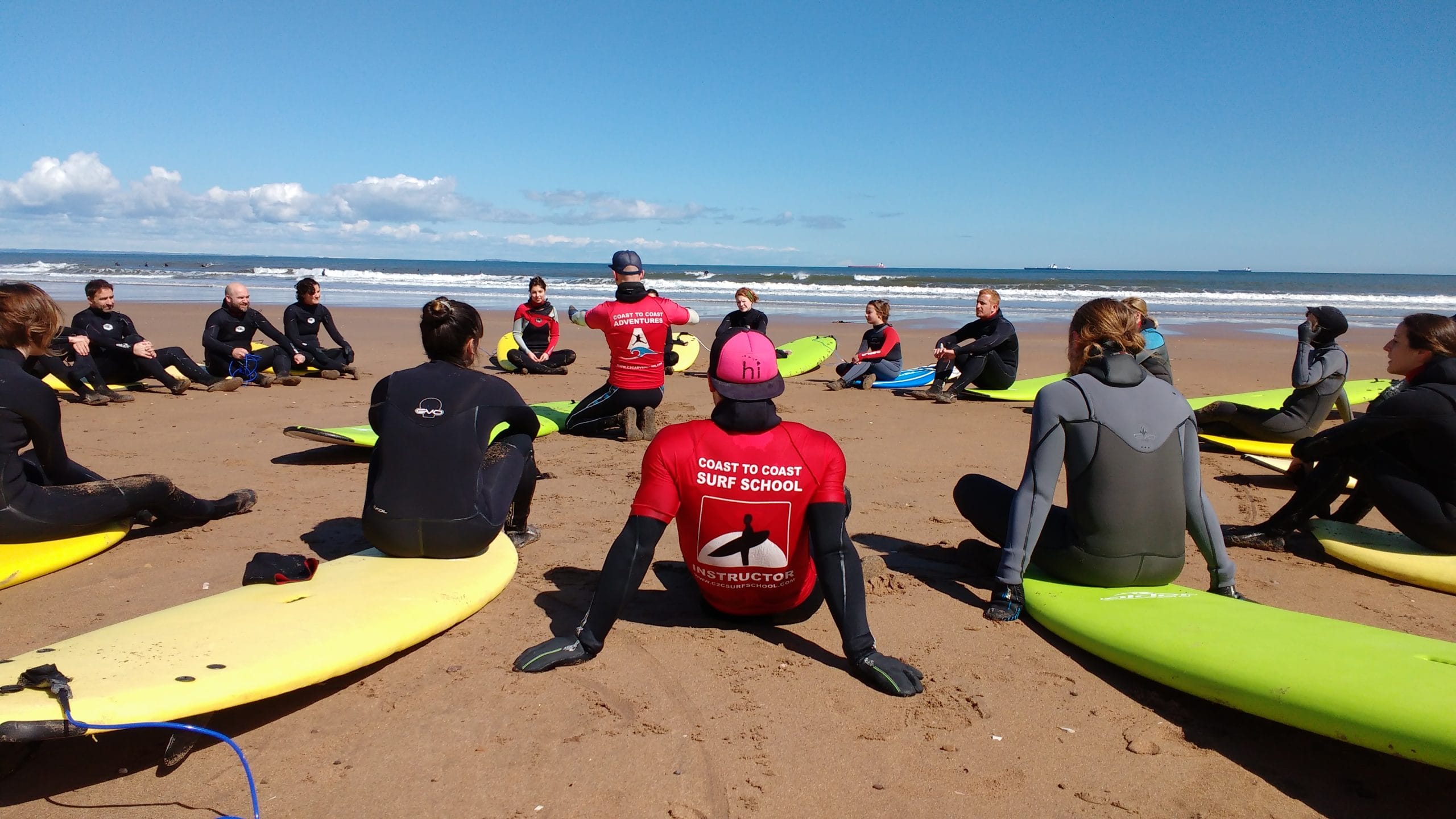
At Coast to Coast Surf School we are always looking for ways to help our growing surf community connect.
If you are looking to meet other surfers and surf safely, here are three options:
1 – Join a surf lesson or hire session. Coast to Coast runs lessons and board hires on most surfable days between April and October. You can text us to find out when the next lesson is and surf alongside the class.
2 – Join a Coast to Coast surf tour. Our surf trips are one of the best ways to meet like-minded surfers and build friendships that last.
3 – Sunday Socials. In 2024 we are launching monthly Sunday Social events at the surf centre. These community gatherings will include surf talks, film nights and social events where surfers can meet and connect.