Can You Learn to Surf at Any Age? An Interview with Chris Robison
Surfers around the world often point to one book as a classic: Barbarian Days by William Finnegan.
It’s an incredible read, full of amazing stories from decades of surfing around the world. However, there is one comment from the book that stuck with me more than anything else.
Finnegan suggests that if you want to become good at surfing, you need to start before the age of fourteen.
Fourteen.
As you can imagine, that idea raises a lot of questions. If that’s true, what happens if you start later? Are you already too late?
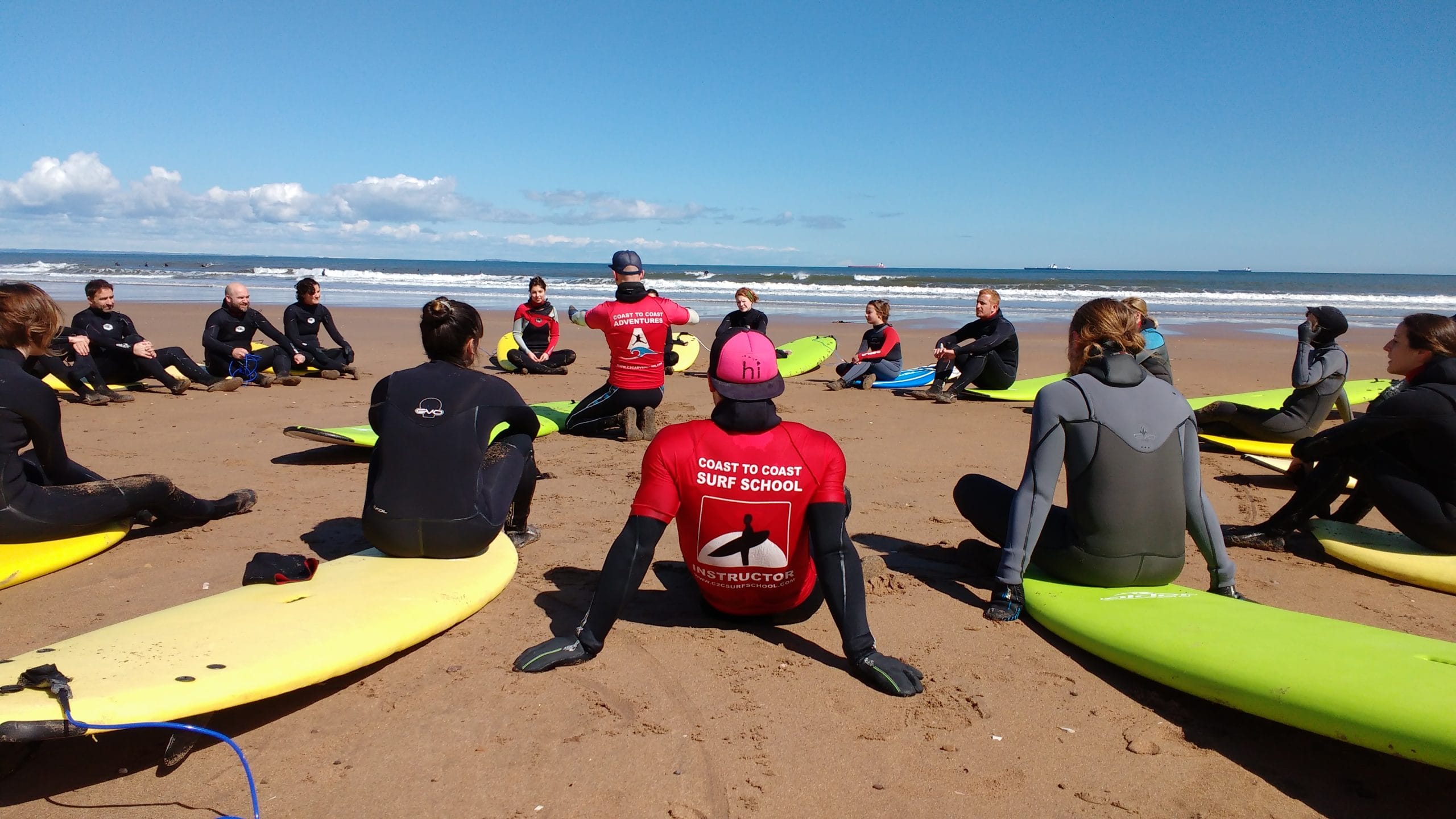
At Coast to Coast Surf School we hear this concern all the time. Many adults contact us asking whether you can learn to surf at any age, or if surfing is only for people who started young.
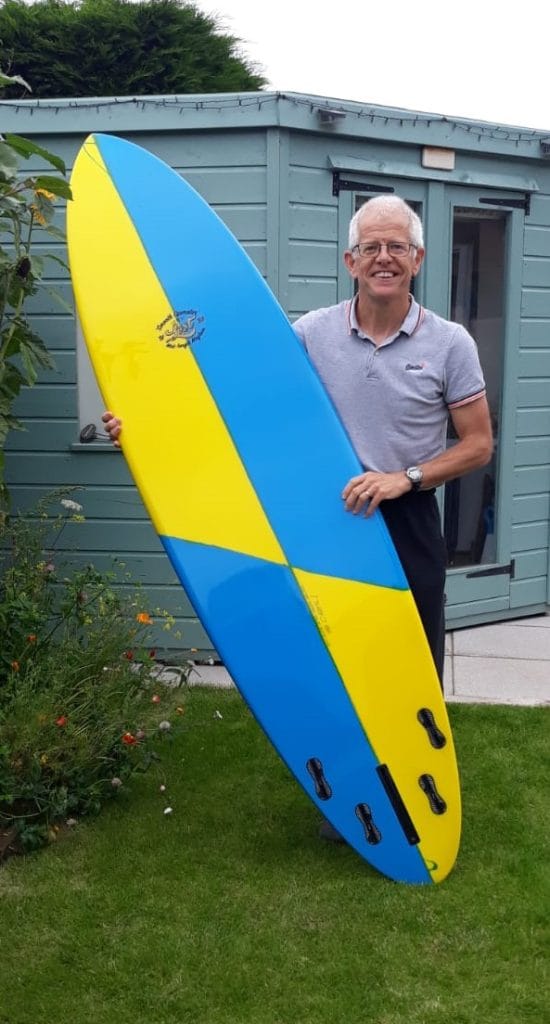
To answer that question properly, we spoke to one of our own instructors, Chris Robison. Chris is 62 years old and has been surfing for nearly forty years. We sat down with him over a coffee – and his favourite Turkish delight – to talk about surfing later in life.
How Did You First Start Surfing?
Q: How did you first get into surfing, and how old were you?
Chris:
I first tried surfing on holiday in Cornwall in 1984. I was about 23 at the time. I went with my brother and a friend and we decided to give it a go.
Our first mistake was not taking a lesson. We just hired boards and paddled straight out without really knowing what we were doing.
We were all runners and quite fit, so we thought that would be enough. However, it quickly became clear that fitness alone doesn’t teach you how waves work.
At the time I was serving in the Royal Navy and was very comfortable in open water. What I didn’t understand was the behaviour of waves and how the sea works close to shore. That knowledge is essential.
Of course, I kept surfing over the years with friends and eventually with my sons when they were old enough. One time, I even bought a fiberglass performance board, which I later discovered was completely unsuitable for my skill level.
I started surfing more regularly when I lived in Cornwall in 1989 and I’ve been surfing ever since.
The first time I came across Coast to Coast Surf School in 2005 through a newspaper article. I brought my sons over for a lesson and I’ve been involved ever since.
Over the years I’ve volunteered with the development squad, helped run surf trips and training sessions, and in 2020 I qualified as a surf instructor. Now I teach part-time at the school.
What Does Surfing Bring to Your Life?
Q: What do you feel surfing adds to your life?
Chris:
One of the things I like most is that surfing is individual. You get out of it what you put in.
I love being by the sea. It keeps me physically fit and it’s great for my mental health as well.
I used to enjoy running for the same reason. You control the effort you put in and the results you get out. Surfing is similar, although of course waves introduce a bit of unpredictability.
But honestly, none of those things are the main reason I surf.
There’s something difficult to explain about it. If I couldn’t surf, I would feel like something important was missing.
I wouldn’t call it spiritual and you’ll never hear me say the word “stoked”, but when you’re in the ocean and the waves are clean, there’s simply no better place to be.
Are There Benefits to Being an Older Surfer?
Q: What advantages does being an older surfer bring?
Chris:
Experience definitely helps. Over time you build a better understanding of the environment you’re in.
Some people think older surfers get more respect in the line-up, but that really isn’t true. When you’re waiting for waves everyone is equal.
The sea doesn’t care who you are. It doesn’t respect age or experience. Waves keep coming and you have to be ready for them.
What Are the Challenges?
Q: What challenges come with surfing as you get older?
Chris:
Flexibility can be a challenge. You really need to look after yourself and maintain good fitness outside the water.
Surfing itself isn’t inherently dangerous, but the sea can be dangerous if you don’t understand it or go out unprepared.
As surfers gain experience they often start heading out in bigger waves. At that point the physical demands increase and you need to be ready for that.
Advice for Adults Learning to Surf
Q: What advice would you give to someone starting surfing later in life?
Chris:
First of all, learn from my mistake and take a lesson.
Before that, it’s important to have a basic level of fitness. If you’re unsure, it’s always a good idea to speak to a medical professional or contact a surf school to talk things through.
The most important basics are simple. You should be able to swim and you should feel comfortable being in the sea.
From there, your fitness will improve naturally as you keep surfing.
You also need to accept that surfing is challenging. Progress isn’t always linear. Some days the conditions will make you feel like you’ve gone backwards.
Don’t get discouraged. Remember that nobody is watching or judging you in the water.
Just focus on having fun. The best surfer is always the one with the biggest smile.
Teaching Adults to Surf
Q: What have you learned from teaching adults to surf?
Chris:
I’ve taught people of all ages, but I genuinely enjoy teaching adults.
One session that stands out was with a school group. One of the teachers was struggling and told me she couldn’t stand up on the board.
I told her, “You can’t stand up yet.”
By the end of the session she was standing up and riding waves.
I remember that moment clearly. In fact, I remember her more than any of the students from that day.
Mindset is everything. Adults learning something new need mental resilience. They need to accept that learning takes time.
However, you don’t need perfect technique to enjoy surfing. You can have an incredible amount of fun simply riding waves.
Staying Active by the Sea
Q: What would you say to someone who thinks surfing might not be for them but still wants to stay active?
Chris:
Surfing isn’t the only way to enjoy the ocean.
You could try body surfing, bodyboarding, or simply swimming in the sea.
Open water swimming has become very popular recently and it’s easy to see why.
Just spending time by the ocean has huge benefits. Fresh air, movement, and exposure to the elements all help improve wellbeing.
The sea is not naturally our environment, yet there’s something special about being there.
There are no membership cards, no rules, and no barriers. The ocean is open to everyone.
Chris’s Final Message
“You are never too old to surf. If you’re reading this, it probably means part of you wants to try it.
Don’t leave that stone unturned. Don’t spend years thinking you wish you had tried surfing.
Just give it a go.”