Choosing the Right Wetsuit for Surfing in Scotland
If you search online for wetsuits, you’ll find countless guides and reviews. Many of them explain the different types of wetsuits available and the technology behind them. While that information can be helpful, it can also feel overwhelming when you are just starting out.
To make things simpler, we’ve put together a straightforward guide to help you choose the right wetsuit for surfing in Scotland.
When to Buy a Wetsuit
Surfing often feels like a way to escape the busy modern world and reconnect with nature. However, like many hobbies, it can become expensive once you start buying equipment.
The good news is that there are ways to reduce the cost, especially when you are buying your first wetsuit.
Below are a few simple tips that can help you get started without spending more than you need.
Buying New vs Buying Second-Hand
There are many different wetsuit brands available. Each one focuses on slightly different qualities. Some suits are designed to be more flexible, while others focus on warmth, durability, price, or environmental impact.
Choosing a new wetsuit often comes down to personal preference. You should think about what you want the wetsuit for. For example, are you looking for a summer water sports suit, or something warm enough to surf in Scotland all year?
From our experience, C-Skins wetsuits are a great option. They are making strong environmental improvements and produce high-quality suits used by many of our instructors.
For mid-range options, both C-Skins and Alder (which we stock at the school) offer good quality wetsuits at an affordable price. Their 5mm suits strike a good balance between warmth, durability, flexibility, and cost.
There are also many other excellent brands to explore, including Patagonia, Rip Curl, O’Neill, Quicksilver, Xcel, Dakine, and Billabong.
However, if you’re new to surfing, spending £250–£500 on a brand-new wetsuit might feel like a big step.
Because of that, second-hand wetsuits can be a great option.
Surf shops and surf schools often run second-hand sales. These are usually advertised on websites or social media, so it’s worth keeping an eye out.
At Coast to Coast, we run two second-hand wetsuit sales each year. These take place in June and September. During these sales you can buy quality ex-hire 5mm wetsuits for around £75–£125 for both adults and children.
This can be one of the most affordable ways to get a wetsuit that works well for Scottish waters.
Even slightly damaged wetsuits can often be repaired. Repair kits are widely available, and many manufacturers also offer professional repair services. Because of this, a wetsuit with a few marks or scrapes can still have plenty of life left in it.
Getting the Right Size
If you’ve never bought a wetsuit before, it’s always best to try one on before purchasing.
Buying through a local surf school can be helpful because they understand the local conditions. They also normally stock wetsuits that are well suited for the area.
Another advantage is that you can sometimes test the wetsuit in the water during a hire session before deciding whether to buy it.
Understanding Wetsuit Thickness
Wetsuits are usually labelled with thickness numbers. These may appear as two numbers (for example 5/4mm) or three numbers (such as 5/4/3mm).
These numbers describe the thickness of neoprene across different parts of the suit. The first number refers to the core of the body, while the smaller numbers refer to thinner panels on the arms and legs.
Choosing the right thickness depends mainly on water temperature.
Generally speaking, thicker wetsuits provide more warmth but slightly reduce flexibility.
Wetsuit Thickness Guide
Water Temperature |
Wetsuit Thickness |
Hood |
Gloves |
| 18-24 | 1-2mm Shorty 3-2mm | No | No |
| 13-17 | 4/3mm
5/4mm |
NO | NO |
| 9-12 | 5/4mm | YES | YES |
| 6-9 | 5/4mm
6/5mm |
YES | YES |
| 0-6 | 6/5mm | YES | YES |
In East Lothian, water temperatures usually range from around 5°C in February to about 18°C in August.
If you followed the chart strictly, you might end up buying several different wetsuits throughout the year.
Instead, we usually recommend something simpler.
Our Wetsuit Recommendation for Scotland
For most surfers in East Lothian, these options work well:
Spring, Summer and Autumn:
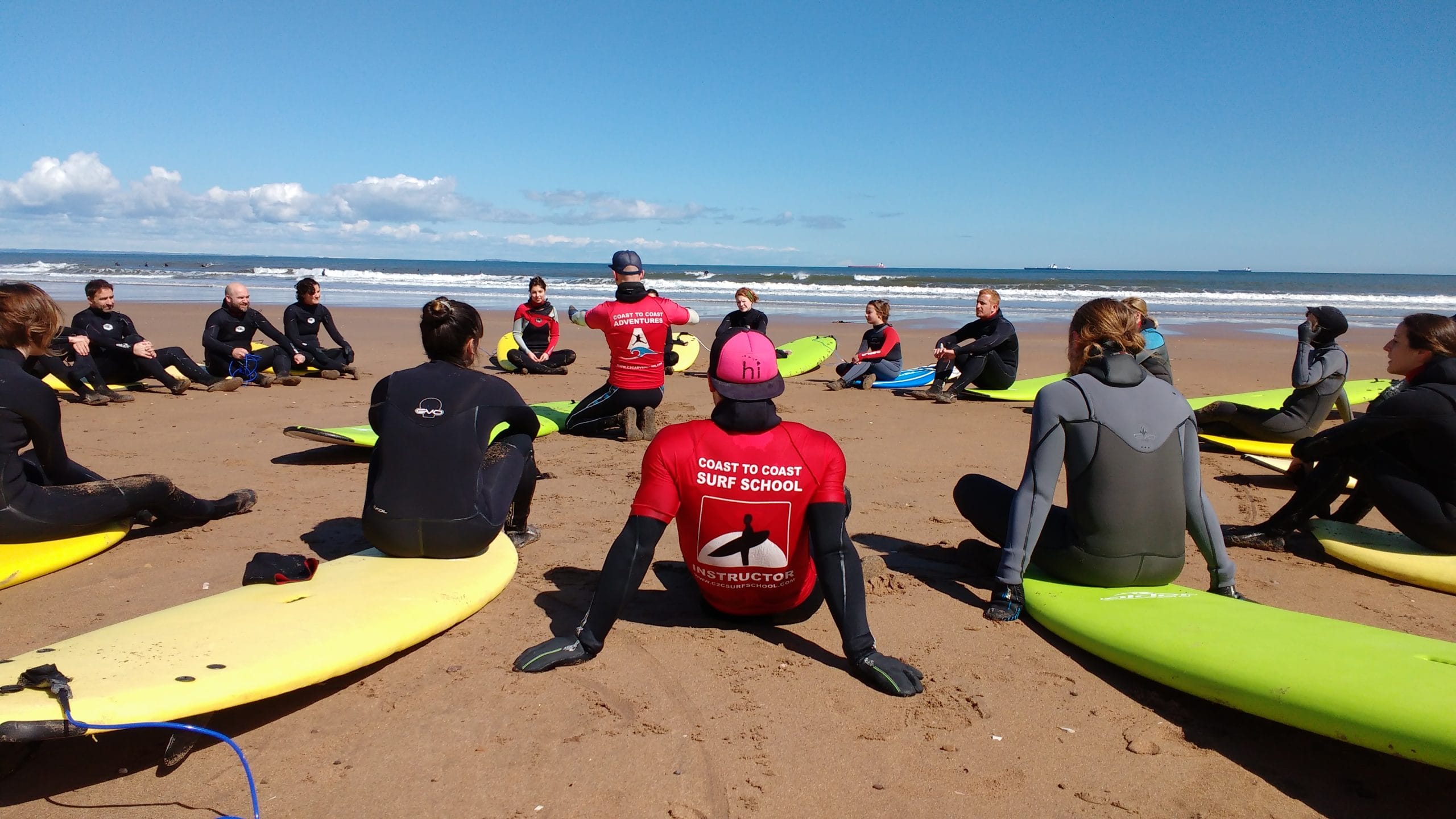
A 5/4mm wetsuit. It may feel slightly warm during the hottest days of summer, but it works well for most of the year. This is also the thickness we use at the surf school.
Winter:
A 6/5mm wetsuit for experienced surfers who plan to surf regularly through the coldest months.
Extra Features to Look For
High-quality wetsuits often include additional features that improve warmth and comfort.
For example:
-
Blind-stitched and glued seams for better insulation
-
Internal thermal linings such as Aerocore
-
Titanium panels for additional warmth
-
Flexible Japanese rubber materials
-
Natural rubber options for more environmentally friendly suits
However, these advanced features are something you can explore later once you have more surfing experience.
Need Help Choosing a Wetsuit?
If you’re unsure which wetsuit is right for you, feel free to get in touch with us at Coast to Coast.
We’re always happy to help you find a wetsuit that works well for surfing in Scotland.